Tue 29 May 2007
![]()
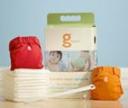
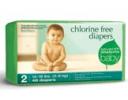
I published a new and updated review of “green” diapers (Seventh Generation, Whole Foods 365 Private Label and gDiapers).
There’s a lot of new information, much of it gained from very recent email exhanges with the companies involved, as well as some more thorough research on the net.
The new review complements the old one with many new facts and considerations about:
- The safety of SAP
- The lack of biodegradation of (even) green diapers in landfills
- Polypropolene as an ingredient
- The biodegradability of gDiapers in sewage, and SAP again
- What does “chlorine-free” mean, what’s the difference between ECF and TCF, and does it make a difference, e.g., between green and non-green disposables?
- And where does the woodpulp hail from?
If the article concludes anything, it is that the choice of diapers is not as easy as it seems, even after you’ve made up your mind about “going green”. For instance,
if I accept that SAP is safe and non-toxic to babies and to the environment, all three diapers reviewed here, and indeed all disposables, are acceptable. But then I ask, what about the other ingredients? If the polypropolene bothers me, I should switch to gDiapers. But what about the wood pulp in gDiapers? Does it matter that it is only Elemental Chlorine-Free (ECF) and not Total Chlorine-Free (TCF)? Come to think of it, this ECF claim that is so intensely advertized to make the green diaper look better, also applies to much of the pulp used in Huggies, for instance? On the other hand, how sure can be be of that? And also, some of the Huggies wood pulp comes all the way from Australia, where do Seventh Gen, 365 and gDiapers get their wood…
Suggestions and comments are welcome: please make them to this post (still haven’t figured out the comment-on-pages issue).
June 5th, 2007 at 7:55 pm
This is a GREAT review and really nice research–thanks for doing it! I cloth diaper for many of the reasons you mention here, but was looking around for reviews for disposables for the few times I use them. I’m impressed you’ve taken the time and energy to research this. It’s nice to know there are thinking people out there considering the truth/importance of the claims companies make.
Cheers!
September 11th, 2007 at 10:31 am
Someone needs to tell gDiapers (which I thought I liked) that pulp from SFI certified forests are CLEARCUT. The Sustainable Forests Initiative (SFI) is a green-washing attempt by the lumber industry to find their own green certification guidelines with no one watching. They need to buy only FSC Certified wood pulp, which is 3rd-party verified. See here: http://www.dontbuysfi.com/ for more info.
September 11th, 2007 at 11:10 am
Thanks Dave! I hadn’t checked out SFI. I’ll go and do some more digging and will present this issue to gDiapers as well - though they still have to get back to me on the long-standing issue of *where* exactly the woodpulp comes from - perhaps not a coincidence?
September 23rd, 2007 at 3:55 am
Dear mama
Hi I has been reading today your blog over the green diapers and i will like to put a couple of comments, or corrections:
I’m a General Manager of one manufacturing unit in the Middle East, I’m from North America, but for some funny reasons I’m working over here.
1. All the disposable diapers from the western or civilized world, we need to use , and special kind of pulp denominated Fluff pulp, this material or the right raw material for making this pulp, comes from one special kind of pine denominated Loblloly pine, that only they grows in the southern part of USA, the main characteristic of the fibers of this pine is the lenght, that is around 6 times larger than the fiber from the eucalyptus, mostly used for facial tissues (Kleenex, Sccotis, etc).
2. There are some others source of fibers almost similar to the Loblolly pine mostly from the Scandinavian countries, but are not long enough, they are like 4 to 4.5 times the lenght of the eucalyptus, this into the performance of the diaper they will affect because if you want to give a better performance you will need to add more SAP.
3. The manufacturers of Fluff pulp are no more than 5, all are in the US and are very reputable organizations like Georgia Pacific, Weyerhauser, Rayonier, International paper, etc. and all of this make Basic chlorine free pulp, under the most ecological conscious manufacturing process.
4. In China, as well as India they are companies supplying some kind of Fluff pulp and superabsorbents, DO NOT TRUST IN QUALITY FROM THESE SUPPLIES, By disgrace and i know the subject as a manufacturer, and i has been seen the samples of this raw materials, and them apart of the low performance once we request them the certification from Medical Clearance requested for the manufacturing of diapers, no one as up to know is giving an answer.
5. The complete chlorine free pulp is nothing more than one non full bleached pulp, that in order to make a diaper work the manufacturer needs to add more SAP.
6. yes, The SAP in small doses is not so harmful, but do you see the desiccant bags into the electronic equipments, have you been open one??, the superabsorbents are the same.
7. The modern superabsorbents are the result of the polymerization of Glacial Acrylic Acid, with Sodium Bicarbonate and additives, they have impact over the environment because at the end are an oil derivated product.
8. The only less harmful superabsorbents are a new generation of secuestrants or retainer gels derivated from the corn, that now are becoming populars over all in the feminine care business.
I have 17 years in this industry, and three kids, and i know something over the subject, if you have any doubt please don’t hesitate to contact me.
December 11th, 2007 at 9:44 pm
Thanks for all of the research you did! It really helped me sift through all of the diaper options.
December 18th, 2007 at 4:00 pm
Now this is investigative blogging! Well done! Thanks so much for doing the research that the rest of us feel guilty about not doing. This is extremely helpful - I appreciate your efforts so much.
January 2nd, 2008 at 10:20 pm
ive been using nature babycare diapers for a while now. Do you have any info on this company? they are from sweden and they say they are 100% biodegradable. any info would be helpful.
thanks
January 4th, 2008 at 12:47 pm
Hi Sofiesmom,
what a coincidence! When we were in Singapore we ran out of diapers. Now, Singapore is a fully (if not, consumer-wise, MORE) developed country and most of their consumer products come from Europe, with European supermarkets, etc. And the only green diapers available were these Nature Baby Care ones.
For one, they were SO EXPENSIVE! I don;t know how much they are where you’re at, but DH and I nearly capitulated and bought the Huggies for less than half the price. I’ll ask DH how much they cost (I’ve blocked it out of my mind) and will do a price comparison with Seventh Generation, for instance.
In any case, we bought them. I didn’t like them much. They absorbed well and we sprung no leaks. But I hadn’t had the opportunity to do a background check - still haven’t, but will. And, more urgently, they were very hard and stiff. Also Amie is growing out of green diapers and the biggest size available only just fit. I couldn’t believe the difference between these stiff Nature Baby Care diapers and the o so soft Seventh Generation (which is now the only brand that fits her).
So, in short, as soon as we get through this flu I’ll get back to you on that brand!
Katrien
January 4th, 2008 at 12:52 pm
Actually,
Daddytypes has a review of them, particularly with regard to their ecofriendliness. Have a look.
January 6th, 2008 at 2:04 pm
Hey brookline mama!
thanks for responding! I get the nature babycare diapers from diapers.com and they are pretty good so far not to $$, I think 11.99 per pack? WHat I am most shocked about is the fact that this country does not biodegrade anything. Do all countries do this? How are we supposed to save the planet? So basically, are we just throwing money away by buying any type of green diapers? should i just use conventional diapers then? they are alot easier to find.
Im confused now.
January 8th, 2008 at 7:40 pm
Thanks so much for this investigation. As a soon-to-be new mom (due in July!!) I’ve been exploring every alternative to disposable diapers that I can find. I think it’s important to demonstrate to him or her from day one that i wanted to leave her with a healthy planet…it’s just so confusing to weed through the claims, jargon and marketing. Thank you for laying out all of this…I’m definitely passing it on to my mommy friends…
January 13th, 2008 at 10:11 pm
Hi Sofiesmom
True: if you throw it into the trash, it goes into the landfill, and then it matters not one iota whether the diaper is “green” or not. So the biodegrading thing is entirely up to you: you compost it (depending on which diaper and whether you want SAPs in your compost) or you bring it to your town’s compost heap (if they have one and if they will have it).
But there are still other reasons for not buying the average diaper.
1. green diapers weren’t bleached with chlorine, so their production was a little more planet-friendly and perhaps also more healthy for baby’s bottom,
2. most green diaper manufacturer’s are concerned with whether their wood pulp comes from sustainable forestry,
3. green diapers contain plastic, but much less than non-green ones.
It’s up to you to weigh whether that is sufficient reason to shell out an extra couple of bucks.
Hope I haven’t confused you more!
Katrien (BrooklineMama)
February 2nd, 2008 at 12:50 am
Visit naty.com to learn about Nature Babycare. Diapers.com sells them. They have NO plastic and no SAP. We love them more than Seventh Generation, which didn’t fit my son and has the gel in them.
Diapers
Nature babycare is the result of many years of intense work and development. It is the first ECO-friendly high-performance diaper, based on new green technology, protected by a Swedish patent. The diaper is soft, thin, comfortable and with perfect sizing. It’s performance is as good as the best ”traditional” diapers. It has an exclusive 100 % chlorine free absorbent material and the material against the baby’s skin is based on corn instead of plastic like traditional diapers, 100% compostable, breathable and extremely kind for the baby. The packaging is 100 % compostable and based on corn.
February 28th, 2008 at 9:53 am
Hi Peony,
I’ve done some investigations on Nature Babycare and still have many questions - the same ones I had for all the other green diapers.
Unfortunately their website - naty.com - is not very informative with regard to the specifics. There is, for instance, nothing there about SAPs. For instance, that a diaper is 100% compostable doesn’t mean there are no SAPs in it, because, as we’ve seen gDiapers argue: you can put SAP in your compost (if you don’t mind the fact that they *don’t* break down). Also, under the FAQ “what are the main differences…”, it states that “60% of the content is biodegradable and of biological origin compared to about leading brands who content 80% for oil based.” So what is that other 40% about?
Many questions, but they haven’t replied to my emails.
I’ll keep pursuing it, though!
Brooklinemama
April 14th, 2008 at 2:14 am
From Peony’s #13 post, quoting Nature Baycare’s website:
It has an exclusive 100 % chlorine free absorbent material and the material against the baby’s skin is based on corn instead of plastic like traditional diapers, 100% compostable, breathable and extremely kind for the baby. The packaging is 100 % compostable and based on corn.
From brooklinemama’s #14 post:
Also, under the FAQ “what are the main differences…”, it states that “60% of the content is biodegradable and of biological origin compared to about leading brands who content 80% for oil based.” So what is that other 40% about?
————————————————–
Here’s my personal interpretation of how you could reconcile the wording: While the filling’s wood pulp is 100% chlorine free and biodegradable, the SAP it’s mixed with, which they don’t mention, is not BD or of biological origin(?). (part 1 of the 40%)
The corn based packaging and the filmy material between baby’s skin and the pulp/SAP filler may be 100% compostable/BD, but what about the waterproof outer backing/cover material? The closure tabs? The leg gathers? (part 2 of the 40%)
April 14th, 2008 at 9:23 am
Hi Stacy,
thanks for the interpretation! It sounds about right. Unfortunately, despite several emails to the company, I haven’t had any response.
It’s my impression - from the popularity of this article, for instance - that parents want clear answers, the truth and nothing but it. We’re informed, we know about about SAPs, we know about “biodegradability”.
It disappoints me that Nature Babycare is not clear about their product and that we have to do all this interpreting to reconcile their own reports.
But I’ll keep trying! If we can’t expect companies to be clear about their products, it’s up to us to make them answer our questions.
Update: we’re potty training here!
April 24th, 2008 at 10:30 pm
What a wonderful exploration and discussion of this important subject! Thank you! I found your site by way of researching whether we should switch from Seventh Generation to Nature BabyCare. We actually really like Seventh Gen and have used them with two kiddos now (well, sort of, since our daughter was mainly in cloth), but we are always on the look out for something greener. Anyway, I’d love to hear more about this, especially if you do hear back from Nature BabyCare. I agree that it is quite a complicated issue!
May 12th, 2008 at 6:22 pm
Your research on this subject is so impressive I cannot even explain. I am attending a Eco-Mom Alliance meeting tomorrow and I am going to “attempt” to discuss a few points on the diaper “controversy”. Your information has helped my knowledge of this topic immensely!! So thank you!!
One thing.. you mention briefly about Tushies being totally chlorine free. But I believe they are SAP free too.. I thought that would be very important to mention..http://www.tushies.com/Tushies_Diapers.html
FRom Tushies Website
“Because Tushies Diapers DO NOT contain a superabsorbent, parents will change diapers
more frequently, resulting in less probability of diaper rash which can be caused by
leaving a superabsorbent diaper on too long.
We’re delighted to hear from hospitals - they like using our GEL-FREE Tushies
size small diapers because they receive a more accurate urine test without
the chemical superabsorbents. And–it’s easier for Moms & Dads to
tell whether or not their baby has urinated enough and whether or
not the baby is receiving enough milk.”
Let me know what you think..
mary
July 6th, 2008 at 2:17 pm
Too bad Tushies leak like the dickens! I wish they worked.
July 11th, 2008 at 3:01 pm
Thanks for all of this research - I’ve been researching the whole “green” diaper, disposable vs. cloth. And living in Seattle, this choice has major social implications. People are very angrily opinionated out here.
What I have seen, at least for my area, is that the impact of cloth vs green disposable comes out at a tie - especially with water issues heating up here and world wide (news flash, the wars of our children’s generation will be about water access, not oil).
A friend had tried the gdiapers, which seemed the way to go, but had so many leaking problems, they had to stop.
Thank you as well for covering the environmental factors that go IN to making diapers (manufacturing, shipping etc), as, ultimately that is just as important as landfill issues.
What I found on the web was an Australian company called Safties Nature Nappy. While I have not gone extensively into the SAP et al research, they say they use only 10% wood pulp and sounds like how they are manufactured is better for the planet than the average green diaper. They were planning to distribute to the US by ‘06 but still don’t. So still holding out hope that there will be a diaper that is manufactured in an eco way, not just disposed of well!
July 14th, 2008 at 12:27 pm
I am glad you put info on Naure Babycare diapers. I use them when we go out and like them a lot.
July 14th, 2008 at 12:29 pm
I am glad to see info on Nature Babycare Diapers. I use them in addition to cloth and I like them very much.
I get them at Target and they are not that much more expensive then the same size package of Huggies. I don’t mind paying a slightly higher price for them.
September 20th, 2008 at 8:51 pm
I am so glad you researched and wrote this article! I write about cloth diapering and green living on my blog, and I was wondering if I could directly link this article? Please let me know. It is very informative, and I’d like to share it with my readers, too.
Thanks,
Hyacynth
September 27th, 2008 at 4:33 pm
I have been doing some research on “greener” disposables and SAP and ran across this very informative post. Thank you!
To weigh in on the Baby NatureCare diapers . . . I was under the impression that they DID contain SAP. We are giving away an “organic diaper cake” made from these diapers right now on the Green Baby Guide. The information sent to me by the diaper cake company says they use “no oil-based plastics.” I’ve noticed that several of these green disposable companies claim to be plastic-free while using SAP–which is a “superplastic.” I am not sure how they are defining it.
Thanks again for such an informative and exhuastive analysis of the options. Please stop by the Green Baby Guide sometime and chime in with your knowledge!
September 27th, 2008 at 11:40 pm
Thank you posting such valuable information!I am due to have my first child soon and have been researching alternatives to using traditional diapers. Your site has helped me make a bit more sense out of all of the ‘eco-friendly’ diaper claims. Keep up the good work!